Spring in Medellín 麦德林的春天
Woken by light
写字的时候是镜像神经元最活跃的时候,我无数次想象别人会怎么读我的文字。那么我就先写给自己吧。我把所有的露怯、虚伪、矫揉造作留给自己。我对自己说,你写吧,没有人审判你,说说你看到了什么,在你充满局限的小世界里。
When writing, mirror neurons are at their most active. Countless times, I imagine how others would read my words. So I'll write to myself first. I'll leave all my awkwardness, pretension, and affectation here, just for me. I tell myself: go ahead, write. No one is judging you. Say what you've seen, within your small and limited world.
春天的麦德林很美,Rosa奶奶的公寓每扇窗子都溢满了光。哥伦比亚人的窗帘和德国人是两个极端:德国人的金属窗帘严丝合缝屏蔽了所有的光,让我以为自己定成了凌晨两点的闹钟。哥伦比亚人的窗帘是一层轻飘飘的白纱,让阳光叫你起床。
Spring in Medellín is beautiful. Every window in Rosa's apartment overflows with light. Colombian curtains and German curtains are complete opposites: German metal shutters seal out all the light so completely that I feel like I've accidentally set my alarm for 2 a.m. Colombian curtains, by contrast, are just a layer of light white gauze, letting sunlight wake you up gently.
Rosa奶奶七十九岁,平常自己住,多出的一间卧室是她的女儿Ana Maria的,她女儿和我妈妈同岁。Ana Maria平常在巴西工作生活,她的卧室就给我暂住了。
Rosa is seventy-nine and lives alone. The extra bedroom belongs to her daughter, Ana Maria, who is the same age as my mother. Ana Maria usually lives and works in Brazil, so I'm staying in her room for now.
Rosa的公寓不大但干净漂亮,充斥着她多年来在世界各地收集的装饰品。墙上挂了许多家人的照片,其中一张是她自己年轻时候的,裹着浴巾捂着胸口眼神朦胧,是个大美女。我每每看到都想,多希望我的姥姥也有过这样的年轻时的艺术照,多希望我的姥姥也有一间周游世界收集的小东西装饰成的屋子,多希望我的姥姥也在八十的时候随身带着泳衣看到水就要去玩一下,而不是被晕车和“老不出门是贵人”绊住了享受世界的脚步。
Rosa's apartment is not large, but it is clean and beautiful, filled with decorations she has collected from around the world over many years. The walls are covered with family photos. One of them shows Rosa when she was young—wrapped in a towel, covering her chest, her gaze soft and hazy. She was stunning. Every time I see it, I think: how I wish my grandmother had photos like this from her youth. How I wish she had a home filled with little objects collected from traveling the world. How I wish that at eighty, she would carry a swimsuit with her and jump into the water whenever she saw it—rather than being held back by motion sickness and the belief that "staying home is a virtue."
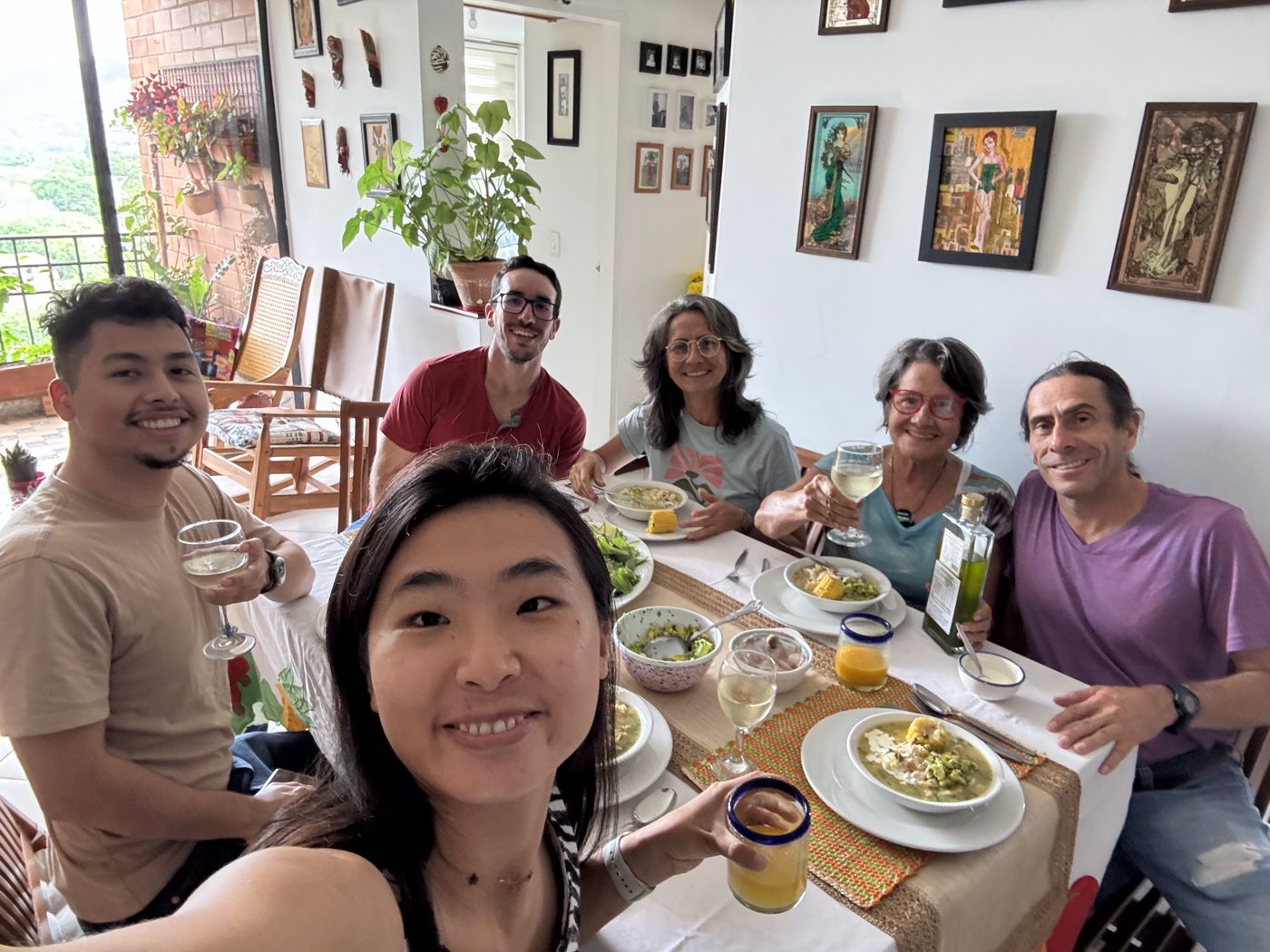
在这间公寓里醒来的第一个早晨,是被光叫醒的,我迷迷糊糊抬头看,薄纱透出阳光,世界是敞亮的、是春天。我许久没有这种身体和大自然节律协调统一的感觉,浑身充斥着轻松。甘村的公寓里,我似乎每天都在和手机闹钟作斗争,无止境地再睡十分钟,有时刚起床已经疲惫不堪。打开窗子,是麦德林“the city of eternal spring”永恒的春城,终年19-22度。夜晚伴着喧闹的西语歌闪烁着万家灯火的山丘此刻绿油油的、此起彼伏,变得恬适。
The first morning I woke up in this apartment, I was woken by light. Half-asleep, I looked up: sunlight filtered through the thin curtains, and the world felt open, bright—it was spring. It had been a long time since my body felt in sync with the rhythms of nature. I felt completely at ease. Back in Gainesville, it feels like I'm constantly fighting my phone alarm—endlessly hitting "ten more minutes," sometimes waking up already exhausted. But here, when I open the window, Medellín—the "City of Eternal Spring," 19–22°C all year round—spreads out before me. At night the hills glitter with lights and echo with Spanish music; now, in the morning, they are lush green, rolling gently, peaceful.
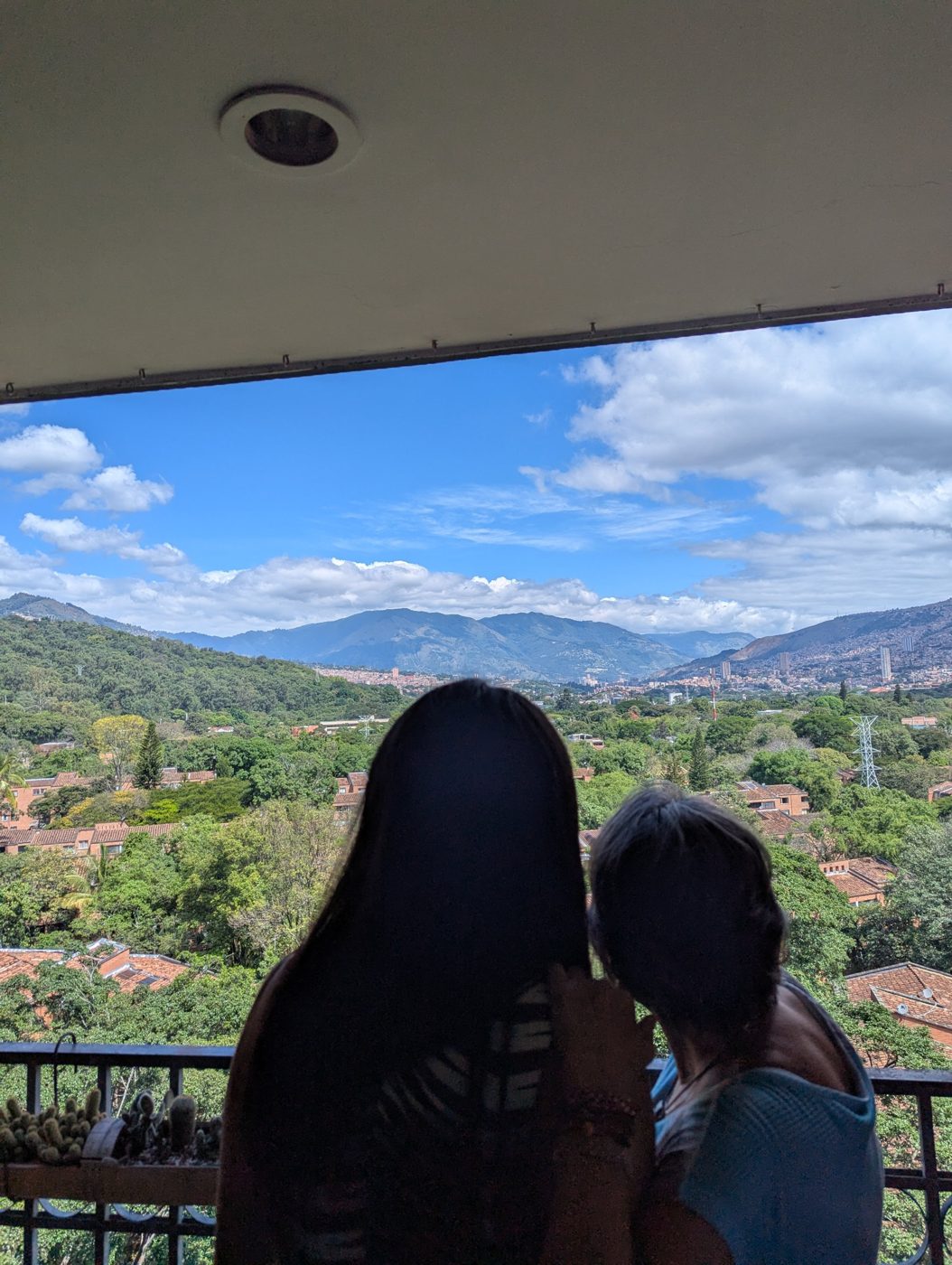
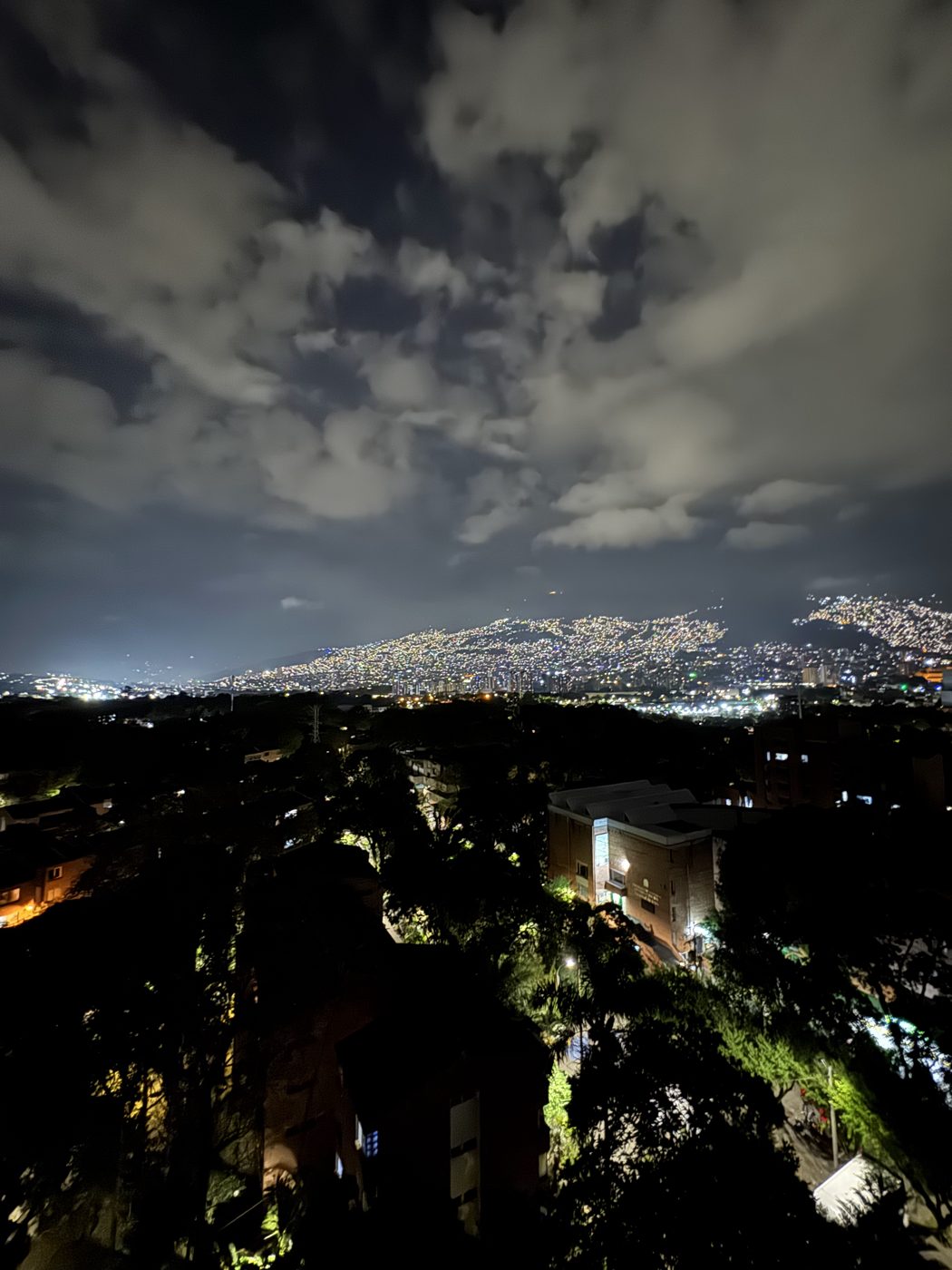
麦德林的日与夜 · Medellín by day and by night
Up the mountains near Jericó, Antioquia
造访异域,没有新的风景,有的只是发现风景的眼睛。
Traveling somewhere foreign doesn't give you new landscapes—only new eyes to discover them.
今天上山,山在小城Jericó附近。我、Rosa、一对法国夫妇坐上了一辆拥挤的充满历史的面包车上山。途中经常有村民站在路边搭顺风车,有的搭的久一点,和我们聊起来,有的很短暂,就扒在车后面扒了“一站路”。
Today we went up into the mountains near the small town of Jericó. Rosa, a French couple, and I squeezed into an old, crowded van. Along the way, villagers would stand by the roadside to hitch rides. Some stayed longer and chatted with us; others just clung to the back of the van for a single stop.
在一个说着陌生语言、有着陌生文化的陌生国度的我是自由的。没带来那些平常日夜陪伴我的枷锁。我变成社交悍匪,背诵起西语课学的自我介绍,学着课上的模版问别人 ¿Cómo estás? 你好吗?¿De dónde eres? 你来自哪里?
In this unfamiliar country—with its unfamiliar language and culture—I feel free. I didn't bring along the shackles that usually follow me day and night. I turn into a kind of social bandit, reciting the self-introduction I memorized in Spanish class and asking people, just like the template from class: ¿Cómo estás? How are you? ¿De dónde eres? Where are you from?
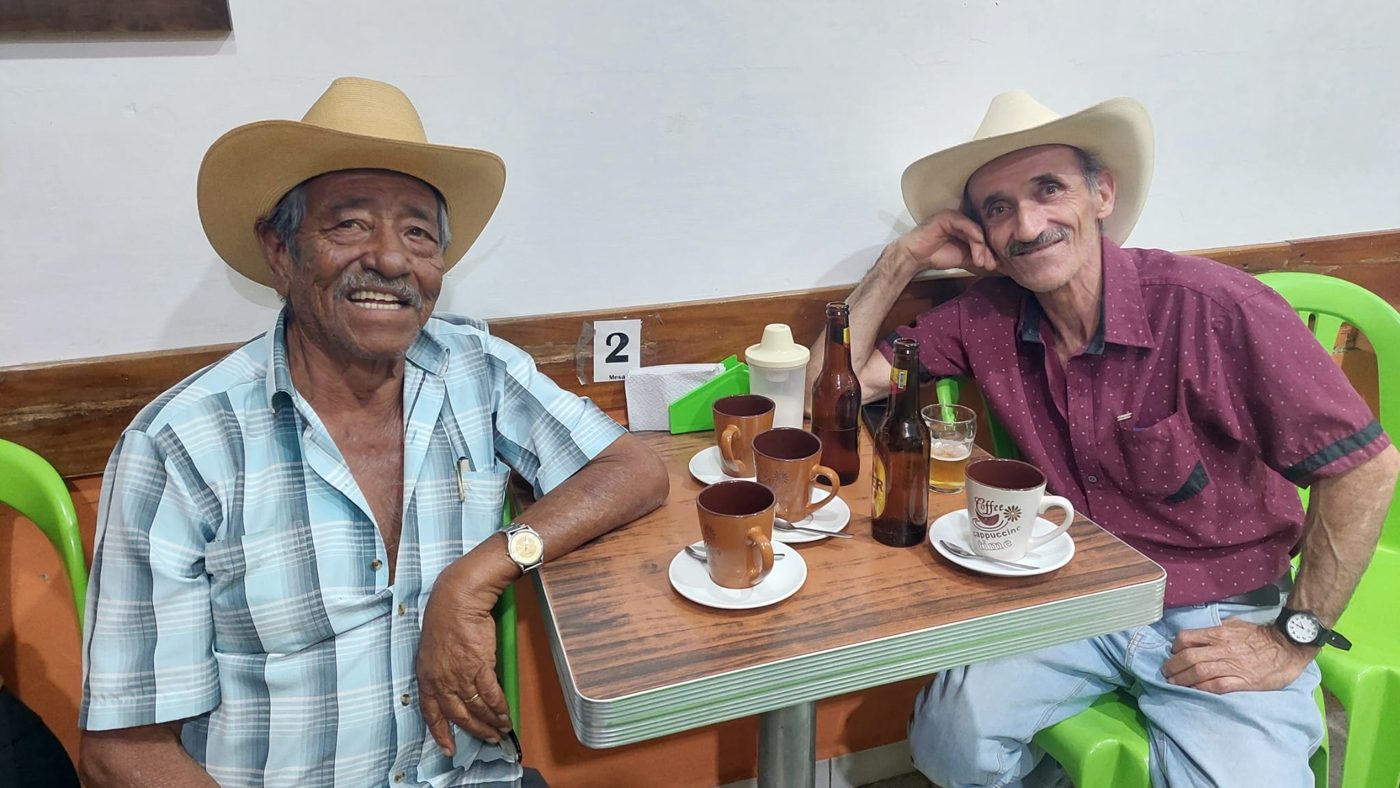
晕车,换座到副驾驶,我问身旁的爷爷 Tengo veintiocho años—¿cuántos años tienes? “您多大年纪”老头满脸褶子很腼腆,一边比划一边说七十五了。我又轮流指着驾驶舱所有我认识的东西轮流用西语讲,帽子,钥匙,鞋,车,衣服,最后指着老头说,abuelo,爷爷。村民们也乐意争着教我,待我像吉祥物。我对旁边阿姨说 Tú eres muy bonita “你真漂亮”,阿姨腼腆一笑。
Feeling carsick, I moved to the front passenger seat and asked the old man beside me: Tengo veintiocho años—¿cuántos años tienes? ("I'm 28—how old are you?") He was shy, his face full of wrinkles, gesturing as he said he was seventy-five. Then I pointed at everything in the front of the van that I recognized, naming each one in Spanish: hat, keys, shoes, car, clothes. Finally, I pointed at him and said, abuelo—grandpa. The villagers were happy to compete in teaching me words, treating me like a mascot. I told the woman next to me, Tú eres muy bonita—"you're very beautiful." She smiled shyly.
一路上有个念头充斥着我的脑海:这里的村民和石板岩乡村民并无二致。他们互相之间热情、熟络,每遇到彼此笑着相互问好,他们熟悉山里的每一条路、每一道辙。他们的狗也一样,每天和主人一起外出小跑在山路上,随地补觉随地晒太阳,比城市里的狗自由很多。看着四处闲卧打盹晒太阳、在山路里上蹿下跳的农村小狗,我无数次遗憾不能给Osita这样的生活。
All along the way, one thought filled my mind: the villagers here are no different from those in Shibanyan back home. They greet each other warmly, smiling whenever they meet. They know every road and every rut in the mountains. Their dogs are the same too—trotting along mountain paths with their owners every day, napping and sunbathing wherever they like, much freer than city dogs. Watching those village dogs lounging, dozing, and darting up and down the hills, I felt again and again a quiet regret that I can't give Osita that kind of life.
可我只有在这里,才开始像小孩子一样瞪大眼睛四处发现,思考、对比,像海绵一样吸收。这似乎是对人的一种诅咒。我们本可以享受自己卧室里的阳光、向每个陌生人热情问好。
And yet only here do I begin to look around with wide, childlike eyes—discovering, thinking, comparing, absorbing everything like a sponge. It almost feels like a curse on all of us. We could have enjoyed the sunlight in our own bedrooms. We could have greeted every stranger warmly.
Enjoy Reading This Article?
Here are some more articles you might like to read next: